

Dividing the Life Built Together
What is Community Property?
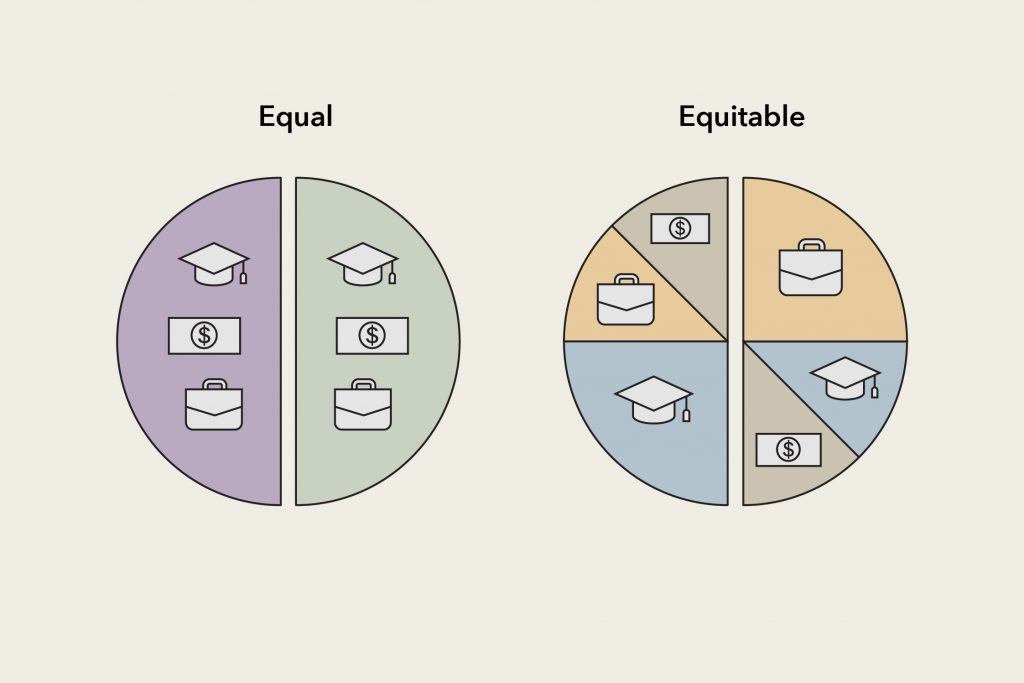
The Community Property framework is utilized in a minority of states (including California, Texas, and Arizona). The underlying philosophy is that a marriage is a complete partnership where both spouses own an undivided one-half interest in all property acquired during the marriage.
Under this rule, any income earned or assets purchased from the date of the wedding to the date of separation are considered “community property” and are typically split exactly 50/50. It does not matter which spouse’s name is on the title or who earned the higher salary; the law views the contribution of a stay-at-home parent as equal to that of a CEO.
What is Equitable Distribution?
The majority of states follow the Equitable Distribution model. Here, “equitable” does not necessarily mean “equal.” Instead, the court looks at a variety of factors to determine what is a fair and just split. While a 50/50 split is often the starting point for negotiations, the judge has the discretion to award one spouse more than the other based on several criteria.
Factors Considered in Equitable Distribution:
- Duration of the Marriage: Longer marriages are more likely to see a near-equal split.
- Income and Earning Capacity: If one spouse has a significantly higher earning potential, the other may receive a larger share of the assets to offset the imbalance.
- Non-Monetary Contributions: This includes homemaking, child-rearing, and supporting the other spouse’s education or career growth.
- Standard of Living: The goal is often to help both parties maintain a lifestyle similar to what they enjoyed during the marriage.
Comparing the Two Frameworks
| Feature | Community Property | Equitable Distribution |
|---|---|---|
| Core Philosophy | Equal partnership (50/50) | Fairness based on circumstances |
| Primary Outcome | Strictly equal division | Often unequal but “fair” division |
| Judicial Discretion | Very limited | High; judges weigh many factors |
| Ownership | Jointly owned from acquisition | Owned by the title holder until split |
The Concept of Separate Property
Regardless of the state’s framework, both systems distinguish between “marital property” and “separate property.” Generally, separate property includes assets owned before the marriage, inheritances received by one spouse during the marriage, or gifts given specifically to one individual.
However, separate property can become marital property through a process called commingling. For example, if a spouse receives an inheritance but deposits it into a joint savings account used to pay the mortgage, that “separate” asset may lose its protected status and become subject to division.
Strategic Conclusion: Navigating the Financial Split
In conclusion, the path to a divorce settlement is paved with complex calculations that extend far beyond simple arithmetic. Whether you are in a Community Property state where the 50/50 rule provides predictability, or an Equitable Distribution state where individual circumstances dictate the outcome, the key to a successful resolution is meticulous asset tracing.
Understanding the difference between these two systems allows individuals to set realistic expectations. Success in asset division hinges on the ability to clearly define what belongs to the marriage and what belongs to the individual. By approaching the process with transparency and a clear understanding of state-specific statutes, both parties can move toward a financial future that is stable and grounded in legal reality. Ultimately, while the law provides the framework, the goal remains the same: a fair transition into the next chapter of life.