

The FBI “Wrong House” Raid Lawsuit: 2026 Supreme Court Victory and Remand Status
As of March 2026, a landmark legal battle over federal accountability has reached a pivotal turning point. Following a unanimous U.S. Supreme Court decision in the summer of 2025, the case of Martin v. United States is currently back in the lower courts, where an Atlanta family is finally getting their day in court. This high-stakes litigation, which stems from a botched 2017 pre-dawn raid by an FBI SWAT team, has become a defining test for the Federal Tort Claims Act (FTCA) and the limits of sovereign immunity for federal law enforcement officers who make “honest mistakes.”
The 2017 Incident: GPS Errors and Flashbangs
The lawsuit centers on the harrowing experience of Curtrina Martin, her partner Hilliard Toi Cliatt, and Martin’s then-seven-year-old son, Gabe. In October 2017, an FBI SWAT team arrived at their suburban Atlanta home intending to execute search and arrest warrants for a suspected gang member. However, instead of the target address at 3741 Landau Lane, the team’s lead agent, Lawrence Guerra, relied on a personal GPS device that led them to 3756 Denville Trace—the Martin-Cliatt residence.
The ensuing raid was characterized by plaintiffs as a “terrorizing” event. Agents breached the front door, detonated a flashbang grenade, and held the family at gunpoint. Mr. Cliatt was pulled from a closet and handcuffed, while Ms. Martin was held half-naked at rifle-point. It was only after an agent noticed a piece of mail on the counter that the team realized they were at the wrong address. Despite an immediate apology from the SWAT commander, the federal government initially refused to provide compensation for the significant property damage and the lasting psychological trauma inflicted on the family.
The 2025 Supreme Court Ruling: A Unanimous Reversal
For years, the family’s attempts to seek justice were blocked by lower courts. The 11th U.S. Circuit Court of Appeals had previously ruled that the FBI agents were shielded by “sovereign immunity” because their actions—specifically how they prepared for the warrant execution—fell under the “discretionary-function exception.” Essentially, the lower court argued that because the agents had to use their judgment in high-stakes situations, they could not be sued for the resulting error.
However, on June 12, 2025, the Supreme Court issued a unanimous opinion, authored by Justice Neil Gorsuch, that threw out the 11th Circuit’s logic. The Court held that:
- The Law Enforcement Proviso: Congress explicitly amended the FTCA in 1974 to allow citizens to sue the government for intentional torts—including assault, battery, and false imprisonment—committed by federal law enforcement.
- No Reflexive Immunity: The Court rejected the idea that the “Supremacy Clause” provides a blanket shield for federal agents just because they are performing a federal policy task.
- The Remand: While the Court did not fully dismantle the “discretionary-function” defense, it ordered a “careful reexamination” by the lower courts, suggesting that “honest mistakes” like failing to check a house number on a mailbox may not qualify for legal protection.
March 2026 Update: Remand Proceedings and Discovery
In March 2026, the case is active once again in the 11th Circuit and the Northern District of Georgia. The Institute for Justice (IJ), which represents the family, has moved into an intensive discovery phase. A major point of contention in 2026 is the “disappearance” of evidence. During the Supreme Court arguments, it was revealed that the SWAT commander’s personal GPS device—the primary cause of the error—was discarded before it could be analyzed. Lawyers for the Martin family are now seeking spoliation sanctions against the government for the loss of this critical evidence.
Current status updates for March 2026 include:
- Psychological Impact Assessments: Expert witnesses are providing updated testimony regarding the long-term effects on Gabe, now a teenager, who continues to suffer from severe anxiety and PTSD-related symptoms linked to the 2017 raid.
- Settlement Discussions: While the government continues to litigate the “discretionary” aspect of the agents’ choices, there are reports of high-level settlement negotiations aimed at resolving the case before it returns to a potential jury trial in late 2026.
- The “Collinsville” Standard: Legal aid groups are citing this case as the modern equivalent of the 1973 Collinsville raids, which originally prompted Congress to expand the FTCA. The 2026 proceedings are being watched as a bellwether for how “wrong house” raids across the country will be handled moving forward.
The Discretionary-Function Debate
The core legal battle remaining in 2026 is whether “going to the wrong house” can ever be considered a policy choice. Justice Sonia Sotomayor, in her 2025 concurrence, noted that the exception should not apply “reflexively.” The plaintiffs argue that a federal agent lacks the “discretion” to be careless. If a delivery driver or a private citizen enters the wrong home by force, they are liable for trespass; the 2026 proceedings are testing whether the FBI should be held to that same standard of common-sense diligence.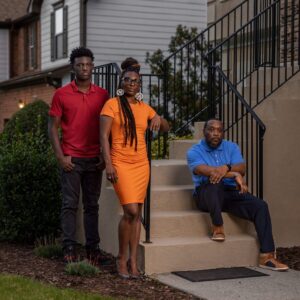
Accountability and Professional Standards
The FBI raid lawsuit highlights the catastrophic consequences of procedural failures. In any complex operation, having multiple layers of verification is essential to prevent “cascading errors.” For instance, integrated design and construction models are used to ensure that every participant is working from the same “source of truth,” minimizing the risk of building on the wrong site or using incorrect materials. Similarly, for agencies and firms managing high-risk personnel, staying updated on employment law updates for 2026 regarding training liabilities and operational negligence is a vital part of risk management.
Future Outlook: Restoring the Fourth Amendment
The resolution of Martin v. United States is expected to have a profound impact on how federal warrants are served. As of March 2026, several regional FBI field offices have already reportedly implemented “double-verification” protocols, requiring two independent sources to confirm a target’s address before a SWAT team is deployed. This “Martin Rule” is a direct result of the pressure created by this ongoing litigation.
Key Milestones to Follow:
- The 11th Circuit’s Re-Ruling: A new decision from the appeals court is expected by mid-2026, which will define exactly how much “discretion” an agent has to be wrong.
- Discovery of Internal Memos: Plaintiffs are pushing to see if the FBI’s own internal “After Action Reports” from 2017 admitted to negligence.
- Potential Civil Rights Legislation: Inspired by the Martin family’s win, members of Congress have introduced the “Accountability in Federal Law Enforcement Act of 2026” to further clarify that wrong-house raids are never shielded from liability.