

Johnson & Johnson Talc Lawsuit Update 2026: Bankruptcy Collapses as Jury Verdicts Top $2.5 Billion
As of March 2026, the long-running legal battle over Johnson & Johnson’s (J&J) talc-based products has entered its most volatile phase to date. Following the decisive collapse of the company’s third attempt to resolve claims through a “Texas Two-Step” bankruptcy, thousands of cases that were previously frozen have returned to active trial dockets. For the nearly 70,000 plaintiffs in the federal Multidistrict Litigation (MDL) and various state courts, the landscape in early 2026 is defined by a series of massive jury awards and a total shift in J&J’s settlement posture. With bankruptcy-related pauses now removed, the focus has shifted to high-stakes trials in Maryland, California, and Pennsylvania.
The Failure of the Third Bankruptcy Attempt (Red River Talc)
In mid-2025, a federal bankruptcy judge delivered a major blow to J&J’s legal strategy by dismissing the Chapter 11 filing of its subsidiary, Red River Talc LLC. This was the company’s third effort to use bankruptcy to aggregate and settle approximately 100,000 talc-related claims—primarily involving ovarian cancer and mesothelioma—for a proposed $8 billion to $9 billion fund. The court cited “voting irregularities” and a lack of “good faith,” effectively ruling that J&J could not use the bankruptcy system to shield itself from its mounting liabilities while maintaining a multibillion-dollar corporate valuation.
Following this dismissal, J&J announced in late 2025 that it would not appeal the ruling further. Instead, the company has pivoted to a “defend-in-court” strategy, stating its intention to contest the remaining claims individually. This move has effectively withdrawn the global $9 billion settlement offer that had been on the table throughout much of 2024 and 2025, leaving many plaintiffs to pursue justice through the traditional tort system once again.
Record-Breaking Verdicts in Late 2025 and 2026
The resumption of trials has resulted in some of the largest verdicts in the history of product liability litigation. In December 2025, a Baltimore jury ordered J&J to pay $1.5 billion to a single plaintiff, a woman diagnosed with peritoneal mesothelioma after decades of using Johnson’s Baby Powder. This award, which included nearly $1 billion in punitive damages, is currently the largest single-plaintiff talc verdict ever recorded.
Other notable legal developments as of March 2026 include:
- Philadelphia Ovarian Cancer Verdict: In February 2026, a Philadelphia jury awarded $250,000 to the family of a woman who died from ovarian cancer. While significantly smaller than the Maryland award, the verdict was notable for the jury’s finding of liability and its award of punitive damages, signaling that even in “moderate” jurisdictions, juries are finding J&J responsible for failing to warn consumers.
- California Mesothelioma Award: In October 2025, a Los Angeles jury awarded $966 million to the family of a grandmother whose mesothelioma was linked to asbestos-contaminated baby powder. However, in March 2026, a judge threw out the punitive portion of this award, leaving the $16 million compensatory verdict standing.
- Florida and Minnesota Trials: Jurors in these states awarded $20 million and $65.5 million, respectively, in late 2025 for cases involving mesothelioma and lung cancer attributed to talc exposure.
Status of the Federal MDL (MDL No. 2738)
As of March 18, 2026, there are 67,115 pending actions in the federal talcum powder MDL in the District of New Jersey. While this number is down slightly from its peak of nearly 70,000 in January, the decline is largely attributed to administrative restructuring following the bankruptcy dismissals. Judge Michael Shipp has signaled that bellwether trials—representative cases used to test how juries react to evidence—will likely begin in the coming months.
Court-ordered mediation is also ongoing. In August 2025, the court appointed a Lead Negotiation Counsel to coordinate settlement talks between the Plaintiffs’ Steering Committee and J&J. While the company is currently “talking tough” and focusing on trials, these mediation sessions are intended to provide a framework for a global resolution if the company’s trial record continues to worsen through 2026.
Risk Mitigation in Corporate Management
The ongoing J&J litigation serves as a cautionary tale for the management of consumer safety and corporate liability. In complex industrial processes, whether manufacturing cosmetics or managing large-scale building projects, having a rigorous, transparent system of checks and balances is critical. For instance, integrated design and construction models are utilized to ensure that every phase of a project meets safety and regulatory benchmarks to avoid the “failure to warn” or “design defect” claims that have plagued the talc industry. Furthermore, as companies face massive legal payouts, staying updated on employment law updates for 2026 is essential for firms navigating the resulting financial restructuring and workforce changes.
Future Outlook: What to Expect in 2026
For those currently involved in or considering a lawsuit, 2026 is a “prove-it” year. J&J has stated that it has won approximately 95% of ovarian cancer cases tried to date and is banking on its ability to win in court to lower the eventual settlement price. Plaintiffs, meanwhile, are buoyed by the recent string of billion-dollar mesothelioma verdicts, which they believe will eventually force J&J back to the negotiating table with a higher offer.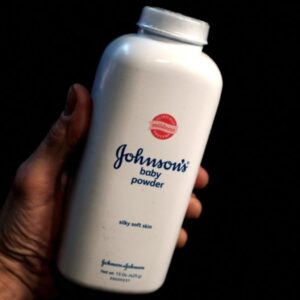
Key Milestones to Monitor:
- MDL Bellwether Trials: The first federal ovarian cancer trials since the bankruptcy collapse are expected to provide the next major indicator of settlement value.
- Appellate Rulings: J&J is actively appealing the $1.5 billion Baltimore verdict and the $65.5 million Minnesota award. Rulings on these appeals in late 2026 will determine if these massive sums actually reach plaintiffs.
- Statute of Limitations: Despite years of delays, legal experts indicate that individuals diagnosed with talc-related cancers may still be eligible to file if they act before specific state-mandated deadlines.
For more insights on protecting your professional brand and legal interests during high-stakes litigation, explore our latest guide on intellectual property protection strategies. The J&J talc litigation remains the largest mass tort in U.S. history, and its resolution in 2026 will have profound implications for consumer safety and corporate law for decades to come.