
Comprehensive Update on 6.2L L87 and 5.3L Engine Litigation
As we progress through 2026, General Motors (GM) continues to face a complex web of legal challenges involving its flagship V8 engines. The GM V8 engine lawsuit landscape has significantly shifted recently, with major consolidations of class actions and new federal investigations into engine reliability. For owners of the 6.2L L87 and 5.3L V8 engines found in popular trucks like the Chevrolet Silverado, GMC Sierra, and Cadillac Escalade, staying informed on these legal developments is critical for protecting both vehicle safety and investment value. This guide provides an in-depth look at the current status of these lawsuits and the mechanical defects at the heart of the controversy.
Consolidation of the L87 6.2L V8 Class Action Lawsuit
One of the most significant developments in the GM V8 engine lawsuit timeline occurred in late 2025 and early 2026, when a federal judge in Michigan ordered the consolidation of nearly a dozen separate class action filings into one unified proceeding. This consolidated action, now led by prominent interim co-lead counsel, targets the L87 6.2-liter V8 engine manufactured between 2019 and 2024. The lawsuit alleges that these engines contain a “dangerous bearing defect” that can lead to sudden, catastrophic engine failure without any prior warning. This consolidation is a tactical victory for plaintiffs, as it allows for a unified discovery process and prevents contradictory rulings across different states.
Plaintiffs in this consolidated case argue that GM was aware of the manufacturing errors involving “choppy” crankshaft finishes and sediment debris in the engine blocks as early as 2021. Despite this knowledge, the lawsuit claims GM continued to sell hundreds of thousands of vehicles equipped with these faulty components. For those monitoring the intersection of manufacturing defects and legal liability, our analysis of integrated design and liability models offers a broader perspective on how technical standards influence court decisions.
NHTSA Investigation and the “Oil Fix” Controversy
Adding weight to the GM V8 engine lawsuit is a renewed investigation by the National Highway Traffic Safety Administration (NHTSA). In January 2026, the NHTSA’s Office of Defects Investigation opened a “Recall Query” (RQ26-001) to evaluate the adequacy of GM’s April 2025 recall of nearly 600,000 vehicles. The core of the issue is GM’s recommended “remedy.” For engines that passed a dealership inspection, GM’s fix was to replace the factory-spec 0W-20 oil with a higher-viscosity 0W-40 oil, along with a new oil filter and filler cap.
However, the consolidated lawsuit alleges that this change in oil specification is a “band-aid” fix that fails to address the underlying structural failures of the connecting rods and crankshaft bearings. Plaintiffs claim that the thicker oil may actually increase internal wear over the long term, reduce fuel efficiency, and negatively impact the vehicle’s resale value. This mirrors the high-stakes environment of commercial real estate litigation, where temporary repairs often lead to larger legal battles over long-term structural integrity and financial loss.
Affected Models and Key Warning Signs
The GM V8 engine lawsuit covers a wide range of high-volume vehicles. If you own or lease one of the following models, you may be a member of the potential class:
- Chevrolet: Silverado 1500 (2019-2024), Tahoe (2021-2024), and Suburban (2021-2024).
- GMC: Sierra 1500 (2019-2024), Yukon, and Yukon XL (2021-2024).
- Cadillac: Escalade and Escalade ESV (2021-2024).
According to the consolidated complaint, failures have occurred in vehicles with as little as 1,200 miles on the odometer. Common symptoms reported by owners include a distinct “ticking” or “knocking” sound from the engine, sudden loss of oil pressure, engine hesitation, and, in extreme cases, a complete “no-start” condition or stalling at highway speeds. These mechanical failures are not just inconveniences; they pose significant safety risks during high-speed merges or heavy towing—tasks these V8 engines were specifically designed to handle.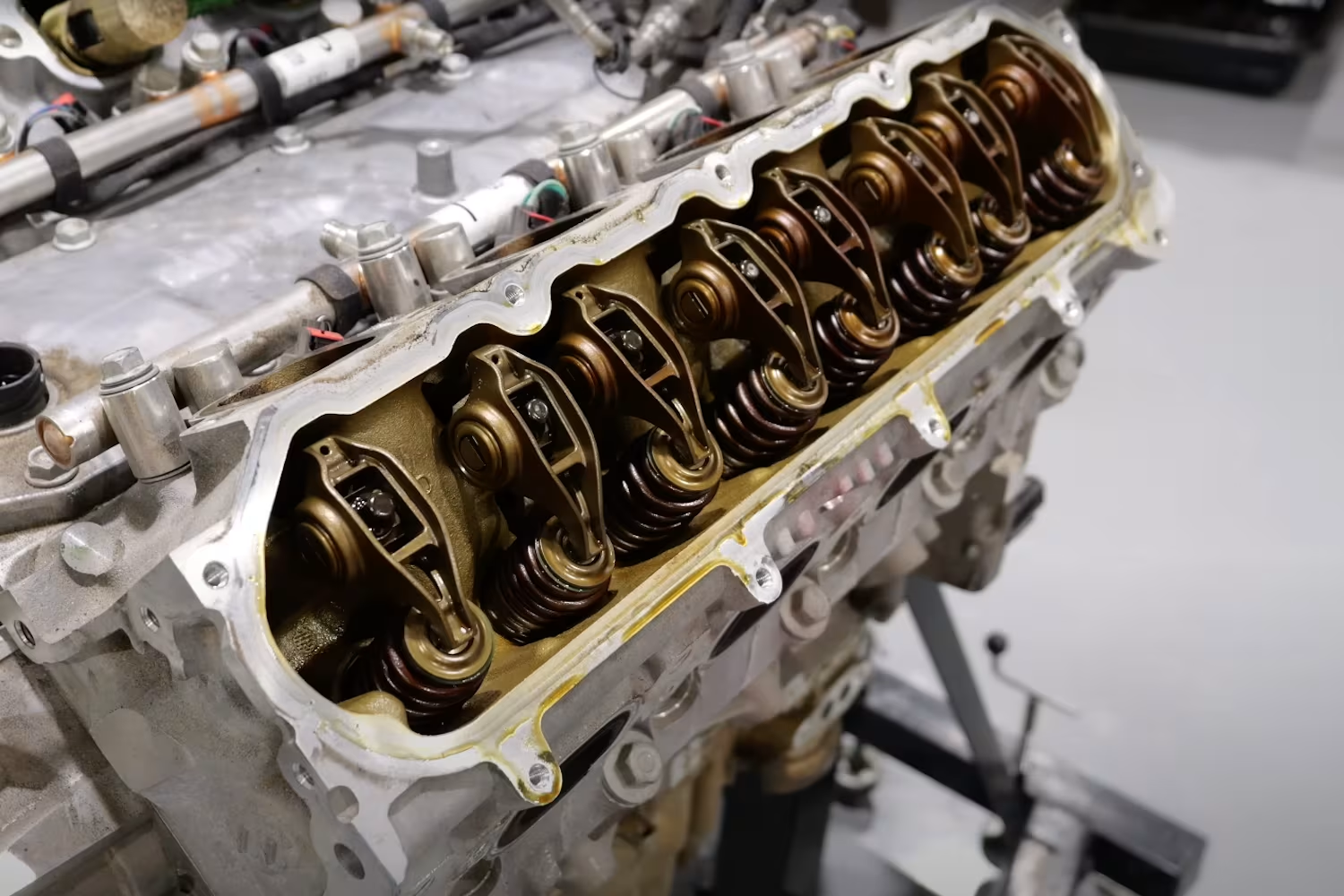
The 5.3L V8 Oil Consumption Settlement Status
While the 6.2L L87 litigation is moving toward class certification in 2026, a separate GM V8 engine lawsuit involving the 5.3-liter LC9 Vortec engine saw significant resolution in late 2025. A judge granted final approval to a $150 million settlement addressing excessive oil consumption issues in 2011-2014 models. Eligible owners in states like California, North Carolina, and Idaho began receiving payments of approximately $3,380 in early 2026. This case centered on defective piston rings that allowed oil to bypass into the combustion chamber, causing spark plug fouling and premature engine wear.
This settlement serves as a benchmark for the current L87 litigation. However, the stakes for the 6.2L engines are significantly higher due to the risk of sudden engine seizure rather than gradual oil loss. The ongoing legal pressure has forced GM to implement “quality improvements” in its 2026 production lines, with reports indicating a shift away from Dynamic Fuel Management (DFM) hardware in certain new models to improve reliability. This focus on long-term safety is a cornerstone of modern corporate compliance and consumer protection, where the duty to disclose defects is becoming increasingly strictly enforced.
Conclusion: Protecting Your Legal Rights
The GM V8 engine lawsuit is a developing legal situation that could result in substantial compensation for affected owners, including reimbursement for out-of-pocket repairs and diminished vehicle value. As the consolidated case moves toward a critical March 30, 2026, deadline for GM to file its formal response, owners are encouraged to maintain meticulous records of all service visits, oil changes, and any abnormal engine noises. Documentation is the most powerful tool for any consumer facing a multi-billion dollar corporation in court.